The media continues its downhill slide into garbage tabloid offerings. Already we have a majority of television news channels spouting fake news, claiming things that have no basis in fact but are purely a product of agenda. Now, true crime shows are descending into the pit, not much concerned with the “true” part of crimes, but simply about the moneymaking, exploitive, prurient aspects to the shows they present. Netflix is the worst offender with its travesty “Making a Murderer” in which a defense attorney is given the freedom to slant the show, to pervert the evidence so as to incite the audience into believing an innocent man (read: psychopathic cat-burning, rapist, serial killer) has been railroaded and should be released from prison.
Now, we see Oxygen (Oprah’s network that set out to do positive shows) doing nothing but true crime junk. I just participated in their show on The Case of Martha Moxley that turned out to be trash. Although a portion of the evidence I presented was aired, the host/ex-prosecutor Laura Coates and ex-police detective Mark Fuhrman poo-pooed what I said, yet never presented any evidence against my conclusions. They also never allowed the fact that Michael Skakel had an airtight alibi to be examined. Their agenda was anti-Michael Skakel and I was only brought on to offer another suspect which they would then shoot down. I will never again do a taped show without a strong belief that I am not being used to develop “drama” as opposed to being there to provide an expert analysis. Now, Discovery is a network I have done decent stuff with including I, Detective for four years which featured mostly police work and evidence analysis - and The Mysterious Death of Cleopatra in which I presented evidence supporting an alternative manner of death (homicide) for the queen as opposed to a suicide by cobra. Fast forward a number of years and Discovery has pretty much nothing but killer shows (literally just about the killers and how cool they are). So I am not surprised they aired Maria Awes’ Committee Film’s Serial Killer: Devil Unchained, a four part series giving infamy to scumbag serial killer Todd Kohlhepp and ignoring much of the truth about the reality of the police work and his claim to be the Superbike mass murderer.
Maria Awes, executive producer and supposed investigative reporter for Committee Films and this Discovery series, has managed to put together an exciting look into the mind of a serial killer and all the horrible things he has done. Lot of reading of Kohlhepp’s letters, face time with him in prison, and reenactments of his rapes and murders will surely give something for Kohlhepp to jerk off to every night of his incarcerated life and titillate the viewers as well . I found it disgusting and revolting to give this kind of attention to a psychopathic killer. Simply reprehensible.
But, let’s move on to the either lack of ethics or lack of investigative journalism of Maria Awes or both. She claims to be an investigative reporter and the series certainly shows her going about researching and trying to get answers. But going through the motions or faking the motions for a television show is not the same thing as true investigative journalism. TRUE investigative journalism like TRUE crime involves the TRUTH, something which does not appear to be important to Maria Awes.
When the promo came out for the show, I was shocked to hear in the video that she and Gary Garrett, the “biographer” of Todd Kohlhepp (read: some dude who once worked with him who claims to be a writer of some sort and became Kohlhepp’s prison pet and, therefore, useful to Awes) both question whether Kohlhepp had committed the Superbike mass murder because of two major issues; one, he claimed all four victims were shot in the forehead when, in fact, none were, and two, that he had the order of the shooting wrong. What I DIDN’T hear was my name being mentioned, that I was the profiler who worked on the case with the Spartanburg County Sheriff’s Office and that I was the profiler who analyzed Superbike via all the evidence I viewed at the SCSO during the week I spent with them, nor that I was the profiler who went public WITH that evidence and was very vocal that Todd Kohlhepp made a false confession and the two biggest proofs of this were the claim the victims were shot in the forehead and that he had the order of the shooting wrong. When I watched the show, sure enough, my name was mentioned nowhere in it and nowhere does the show credit me with the original analysis bringing up these important points.
Both, Awes and Garrett have responded to my accusations of unethical journalism, that they presented this analysis as their own without crediting my work. Both have stated they came up independently with these conclusions but, neither claim they never knew about me or read my work. In other words, they read my blogs online that included all of my analyses. Even Todd Kohlhepp has read my blogs!
Pat - it is important you know that all of the reporting for the series was based on an independent review of the full case file and consultation with others close to the case. It was not based on any work you had previously done on the case. Maria Awes via Twitter
Ms. Brown, I’m disappointed to read such harsh word directed toward me, particularly without provocation. My opinions are based solely on my extensive investigation. My questioning of Todd’s guilt in the SBM shooting came solely from my first face-to-face interview with him at Broad River Correctional Institution following the receipt of his lengthy account of the crime. After this meeting I returned to the ballistic evidence I had obtained through a FOIA request. The evidence in my hands at that time was incomplete, but using photographs of the building and video footage from Geraldo at Large, I matched the locations of each shell casing, except for two. These two casings raised many questions. I'm sure you can guess which two. Determining their position in the building became a priority. Eventually, I gained access to the files and received my answer, using the same ballistic evidence you have studied. I have used no one’s opinions in my verdict, which I won’t voice here. Furthermore, I question your sincerity of wanting the truth behind the crime, when you have attacked John Douglass, claiming his profile was off base, and now you are coming after me because you think my conclusions are similar to yours. It baffles me that your first response to hearing someone with a comparable opinion is to verbally assault them, particularly since all you’ve heard of my beliefs is a seconds-long snippet. I’m studying the same case files as you—accept that my conclusions might parallel (or diverge) from yours. But you don’t know what my conclusions are, so I would appreciate some courtesy in how you speak about me publicly. I welcome a discussion about the case, but a personal attack is uncalled for. Garry Garrett via Facebook Messenger
Garrett seems like an opportunist, so I really don’t care that much about his lack of ethics (although when his book comes out, I will not be happy if he continues to present my analysis as his own without properly footnoting and crediting me). But, Awes has no excuse. As a long time reporter and producer (for Minnesota local news stations and for Discovery Channel and for her own company), she knows both of me and of my work. I did a lot of crime news for Minnesota during my four years living there (and after I moved back to MD). She clearly knows how to do preliminary research on any subject matter before pitching a show to a network like Discovery. So, do tell, how is it she can entirely leave me out of the documentary (and for that matter, not include Don Corbett, retired police detective who worked a long time on the Superbike case and wrote a blog for me about the case at The Daily Profiler) or at least credit me in the documentary for the analyses she is going to use that are clearly mine. I really don’t care if you come to a similar conclusion after looking at the evidence; if you read my analyses first and THEN saw the rest of the stuff, you can’t claim it was 100% your determination. My work must be mentioned or it is simply theft, plagiarism, and unethical as hell.
Here are the TEN blogs Maria Awes and Gary Garrett had to have read (even Todd Kohlhepp admitted to reading them when talking to detectives). Please give them a read, media folk, and others, and tell me that I was unknown to them and my work had no influence on them. The first one was written in 2012 after America’s Most Wanted did a spot on Superbike and Sheriff Wright lied to the public. After the blog went online, Wright trashed me on television news, claiming I read everything about the case on the Internet. I followed up with three blogs about the case evidence and Don Corbett wrote one about the SCSO and Sheriff Chuck Wright.. I went to the press about this and nothing was written. After Todd’s false Superbike confession, I wrote five more blogs, three right afterwards in 2016 and two more in 2017 and the local newspaper did comment that I did not think he was guilty of that crime. Unfortunately, NO media would present the issue that none of the victims were shot in the forehead. Oh, hey, notice that blog actually titled None of the Superbike Victims were Shot in the Forehead? Don’t you think Ms. Awes saw that? Two or three years ago? Before she actually got hold of any actual documentation from the police or FOIA?
Oh, lastly, I almost forgot, even though evidence was presented that Todd Kohlhepp didn’t actually know how Superbike went down, retired FBI profiler John Douglass tells Awes on the show that he probably just didn’t remember. Awes agrees...yeah, Kohlhepp is still likely guilty of Superbike. And, let’s leave out the FACT the police actually TOLD Melissa Brackman (wife of victim Scott Ponder) that Kohlhepp knew something only the killer and the police knew, that “all the victims were shot in the forehead.” An investigative reporter with ethics and a desire for the truth? I don’t think so, Ms. Awes.
Before I go on to yet more oddities with Todd Kohlhepp's confession, let me recap what I wrote in my last post that strongly suggests his confession to committing the Superbike murders is false.
1) He claims he shot all the victims in the forehead; NONE of the victims were shot in the forehead.
2) He claims he used the brass magazine first and, then, after shooting seven bullets from his weapon, he made a "tactical reload" with the nickel magazine. If the nickel magazine was not the first magazine in his weapon - brought in to the shop with one cartridge loaded into the chamber and that one replaced in the magazine (10 + 1), how did he use 11 nickel cartridges in the shooting when he could have only have ten in the magazine when he reloaded? In order to shoot those 11 nickel bullets, he would have had to load the nickel magazine first and the brass second.
3) He claims he shot Chris Sherbert, the mechanic, first. He claims he shot him twice in the lungs with the brass ammo and then came back around and shot him in the forehead with the nickel ammo. However, Sherbert was shot three times with brass ammo; once in the back, once in the chest, and once in the top of the head. There were also two brass bullets shot into the wall that missed Sherbert.
4) He claims he shot Beverly Guy two or three times in the chest. She was only shot once in the chest.
5) He claims he reloaded his gun inside the store and only shot Scott Ponder with nickel ammo and shot both Ponder and Brian Lucas in the forehead with nickel ammo. They were shot in the head (not the forehead) with brass ammo and there were brass casings on the outside of the store. This is impossible if he reloaded inside.
And don't you wonder why if Kohlhepp thought the brass ammo was crap (in his confession), he would have loaded one of his magazines with it? He is an ammo nut and this was supposed to be a premeditated crime. Wouldn't he load his magazines with his best ammo? In fact, because there WERE two different kinds used, it is more likely this was a last minute rage crime where the killer just grabbed his gun and an extra mag or two and didn't have time to think about what ammo he was using.
Okay, so now we are caught up. But is there more questionable stuff coming out of his confessions? Yes.
6) He claims he left his college - Greenville Technical College - on the day of the murder around 2 pm....uh....maybe 1:30 pm...umm..."we" are kind of hazy about that. He sure is. First of all, who is "we"? Did he have an accomplice or is he talking about how he and someone were trying to figure out what time he should give in his confession to make it all work? Regardless, NEITHER of those times work! The drive time from his college to Superbike is around 50 minutes without any traffic holdup. Then, one has to include more time for him to pull off the road into the parking lot at CVS to put on his shoulder holster and pull back out again. Now, "we" are close to an hour. IF Kohlhepp left at 2 pm, he would have missed the murders entirely. IF he left at 1:30 pm, he would have been too late to be the guy that Kelly Sisk saw on the motorcycle because Sisk left the store with his child at 2:10 pm.
7) He claims he waited around because he didn't want to shoot customers. In his full confession, he states only customers (in general); he does not mention Kelly Sisk and his child being there nor does he seem to have any clue about the waste truck that pulls up after Sisk leaves with two more men who enter the building nor does he seem to know about Lonnie Rogers, the TRUE last customer who arrived at the bottom of the hour, had his credit card run at 2:30 pm, had to move his truck because he blocked the waste truck and they couldn't leave the parking lot, got together with Chris Sherbert and Brian Lucas (when he arrived) and had a baffle put on his motorcycle. It is odd that it is only during a later portion of the interviews (after he had given his rendition, and is reviewing and signing the papers) when the detectives then asked some clarifying questions that Kohlhepp says "I know a guy came in with a kid looking for a go-cart and left." Why would he say he "knows"? If he was present that day, he should simply say, "There was a man and a child there." To say "I know" sounds more like he got the information from someone else, a someone else who wants to make him the guy in the composite, the guy Sisk saw (but never identified as Kohlhepp), the guy on the motorcycle who seemed to be buying a bike for the first time and whom Scott Ponder had never seen before. It is also odd that after the detectives ask him if he pistol whipped anyone, he says he did not and wouldn't do that....but, then he seems to get curious and asks, "Who got pistol whipped?" Why would he even ask that if he was there and nobody was pistol whipped? At the least he should ask, "What made you think anyone got pistol whipped? But, he didn't ask that.
8) He claims not to remember any of the victims' names, quite odd for a man who had dealings with these people, accused them of stealing his motorcycle (three days or fourteen days after he bought it; he can't seem to keep that story straight), and that he went specifically back to the store to murder. In fact, even though his victims have been ALL OVER the news for years and it seems he likes to keep up with the news, he has never learned their names. Yet, he knew MY name! Yes, that is right! He discussed Miss Brown (Todd's confession 11/5) with the detectives! He said she came to town and was running her mouth and her profile was completely wrong on all points and that she was a criminal because she was driving fast on the roads trying to do a time check on one of the suspects, that she was wrong about the guy who found the bodies being the killer (which I never claimed; I just said he should be further investigated) - just because he went into the store to make the 911 call - (he assumes he didn't have his cell phone which is not true) - Kohlhepp says that isn't proof of anything but that he's a "dumbass."
Why does Kohlhepp know my name, know that my profile was "totally wrong" (he clearly said "profile" and not "blog;" it is evident he never read my blog and my actual profile has never been made public). Why is he talking about Noel Lee (the guy who made the 911 call) and why is he saying I was runnning my mouth? What does he even care? Well, his words do not sound a bit like they come from his brain but from a talk he had with someone who WAS annoyed with me and told everyone I was wrong and was running my mouth - Sheriff Chuck Wright. This leads me to believe that even before the first taped interview, Sheriff Wright was talking with Kohlhepp about Superbike.
Almost everything Kohlepp claimed in his confession was wrong. That a Beretta was used in the crime, I do not know is a fact. I was told when I was in Spartanburg that the weapon used was a 9 mm and it was not a Glock, but other than that, they did not know the make of the gun. What Kohlhepp DOES have right - the ONLY thing he seems to have right is the type of ammo - brass and nickel (that was already public knowledge) and the manufacturer of the two kinds of ammo (I don't know that his claim of grain is right because I never was given a ballistics report and it hasn't been released to the public). I find it hard to believe that he knew nothing about the scenario of how the murders went down at Superbike, but knows the ammo (although these are super popular brands and he could have guessed them). Perhaps someone who had a little chat with him about Superbike before any taped interviews might have fed him that information. In fact, it was the Sheriff Wright's version that Sherbert was shot first and isn't it interesting that Kohlhepp says that's what happened even though it is disproven by the brass and nickel evidence.
Todd Kohlhepp was wrong about the entire scenario: the order of the shooting, the order of the magazines, the number of shots to victims, the kind of headshots, the time, and the people in the store.
Todd Kohlhepp knows nothing about what happened in the Superbike store because he was not there. He "knows what happened" he says. Again, "it is odd to say "I know" which indicates you have information but not necessarily experience. To have committed such an "amazing" crime - cleared the place in 30 seconds as he claims - and not remember one bit of it correctly is quite a stretch and he should never have been convicted. Surely, if the Superbike case had gone to court, a defense attorney would have crushed the prosecution and he would have been found not guilty.
And why do I find all these inconsistencies and incorrect statements in Kohlhepp's "confession" but the investigators don't seem to notice them? Why don't they even bother to interrogate him? Shouldn't they want to be sure they have the truth from their suspect?
There is no question that Todd Kohlepp is a serial killer, a sadistic one, and very psychopathic. He is also a pathological liar as is a common trait of psychopaths. He got caught red-handed with a girl chained in a container in his backyard. She immediately told the police that he had killed her boyfriend and another couple, all their bodies buried on his property. The police didn't need a confession to convict him; the evidence and live witness could do that job just fine and, if this case went to trial, it was clearly a slam-dunk conviction worthy of the death penalty.
Only the serial homicides didn't go to trial. Todd Kohlhepp took a plea deal that got him out of the death penalty in exchange for....supposedly saving the families from the agony of a long, public trial and saving the state money...but, wait, there is more.....confessing to the 2003 Superbike mass murder that had long dogged the police with their failure to solve the case.
Sheriff Wright, just days from going up for re-election, considered his prayers to be answered when Todd Kohlhepp dropped into his custody and I can't disagree. No sooner than the perfect patsy fell into Wright's hands, genie Wright popped out of the bottle in front of Kohlhepp granting him three wishes....and, lo and behold, Kohlhepp confesses to murdering four people at Superbike. And they prayed together. How sweet.
Fast forward until the beginning of June and a hearing is held, solicitor Barry Barnette lays out a rather short story of how Todd Kohlhepp committed the Superbike murders and Kohlhepp nods and says, "Yes, sir," when asked if what Barnette told the judge is accurate. Kohlepp receives his sentence of life and is shipped off. Everyone goes home happy except for the people that know better and believe in the truth.
The truth is there is no evidence linking Todd Kohlhepp to the Superbike crime and his confession is false.
(I am comparing Kohlhepp's statement to the files I reviewed at the Spartanburg County Sheriff's Office from August 24-28, 2009)
First, Kohlhepp says he went in and sat around on a cycle until the place cleared of customers. A mighty odd thing to do for anyone about to commit a crime; just sit there and let your face be seen by a bunch of people who then might be able to identify you. Kohlhepp says he didn't want to kill paying customers, only the Superbike people. That is real nice of Mr. Psychopath; he didn't have a problem killing three other people he lured onto his property and raping women, so, somehow I don't think he would blink if he had to take out a few more people to protect his identity. Not to mention, his vehicle would have been sitting out in front of the store for such a long time that someone might just remember what it looked like. In all, if Kelly Sisk (NOT the last customer; that was Lonnie Rogers) actually saw Kohlhepp sitting on a bike (and he never identified that man as Kohlhepp and also stated that he appeared to be a first time buyer and that Scott Ponder did not know him) that means Kohlhepp would have had to be hanging around the shop for almost an hour before the shootings (Kelly Sisk left the building at 2:10 pm); again, odd behavior for a killer who wouldn't want to be recognized, especially one who claims he is known to the employees and has come around quite often to check out the bikes, a local whom anyone might recognize.
Now, he says he waited for the place to clear of customers and for Brian Lucas to return to the property. He says when all four people were finally in the store, it seemed like no one else (customer) was there. This is not so. When Brian Lucas returned, he was coming to bring a baffle to put on Lonnie Rogers bike (the true last customer) and all of this took a bit of time and then Mr. Rogers left.
At any rate, when the store is empty of customers, Kohlhepp says he went into action. He told them he wanted to buy the bike, Sherbert took the bike in the back to prep it, and someone went to work on the paperwork. After a few more minutes hanging around, Kohlhepp then states he went into the back, walked up to Sherbert and shot down at him (he was crouched behind the bike) and shot him twice in the lungs with the brass ammo.
FALSE: Sherbert was the last victim of the Superbike killer. The magazine with the brass shells was the second magazine used. The reason just seven shells were used is because at that point all the victims were dead. Sherbert was shot at twice from the area of the swinging doors as there are two bullets in the wall and it would seem the first one nicked him as he then threw a wrench that had blood on it in the direction of the shooter. The shooter then came up over him shot him once in the back, then once in the chest, and then came around the end of the bike and shot him once in the top of the head. All these five shots were brass.
Kohlhepp then says he came through the swinging doors and all the other three were right there. He had to shoot Beverly Guy - two to three times in the chest - and his says the pattern was terrible. The two to three shots would be brass casings.
FALSE: Beverly Guy was shot only once in the chest. It was a nickel casing. She was also shot once in the head (nickel casing) which means she was shot in the head and chest with no time in between, most likely in the head first, and then the chest. The killer likely likely pointed the gun at her face and she turned away causing the shot to hit her in the right side of her head. Then the killer shot her once in the chest.
Next Kohlhepp says the two men were running toward the door and he hit one of them (Brian Lucas) two or three times in the back with the brass causing him to collapse in the doorway, the other leaping over him to get out of the building.
FALSE: Both men sustained all body shots with the nickel casings. Brian Lucas only sustained one body shot.
At this point, Kohlhepp says he made a "tactical reload." Even though he has guys escaping and still should have another three shots in the magazine and one extra one in the chamber, he decides to lose time and change magazines. This would mean he then loaded his ten round nickel magazine with no time to chamber any round and add an extra to the magazine. So, how does he end up shooting 11 shots if it is the second magazine in the gun are the nickel shots? He would only have 10 nickel shots loaded in the magazine.
FALSE: The reason there were eleven nickel shots is because it was the FIRST magazine that was already loaded into the gun with the ten in the mag and one in the chamber. The SECOND magazine was the brass and the killer used up seven and then didn't need to use the rest. If he made a tactical reload while still inside the shop after shooting Lucas in the doorway, why are their brass shell casings on the outside of the store by Scott Ponder's body?
Kohlhepp follows the men to the door and out, shooting Scott Ponder multiple times. This would be with the nickel shots which is accurate. Then he says he shot Ponder in the forehead and then went back and shot each victim in the forehead (which would still be with the nickel ammo).
FALSE: Ponder, Lucas, and Sherbert were all shot in the head with the brass ammo (Guy should be silver ammo for the headshot but that would be earlier on). NONE of the victims were shot in the FOREHEAD. NONE!!
Lucas was shot in the left side of the head.
Ponder was shot in the right side of the head.
Guy was shot in the right side of the head.
Sherbert was shot in the top of the head.
Scott Ponder
Right temporal region 4.75 inches from the top of the head, 3.0 inches to the right of midline, and 4.25 inches circumferentially from the midline anteriorly
Brian Lucas
Gunshot wound 1 – Above left ear 3.5 inches from the top of the head, 2.75 from left of midline. No powder stippline or tattoing is identified.
Beverly Guy
Gunshot Wound 1 - Entrance wound in the right temporal region at the hairline 3.5 inches from the top of the head and 3.5 inches to the right of midline. No surrounding soot or powder
deposition is identified. A barrel imprint is not present.
Chris Sherbert
Gunshot wound 1 – Left paritel skull 0.5 inches from the top of the head and 1.75 inches to the left of midline. The wound measures 0.32 inches in diameter with a small superficial abrasion associated with the wound in the hair.
After Scott Ponder was on the ground and 11 rounds had been fired from the magazine with the nickel ammo, the shooter changed magazines to the brass ammo. He then went to the back room where he knew there was one man left, firing two shots at Sherbert from a distance as he came through the swinging doors (bullets went through the wall) and then came up on him, shot him twice in the body and then in the top of the head. Five brass casings were found in the back area.
With Sherbert clearly taken care of, the killer returned to the front room passing by Beverly Guy who was clearly dead with a chest and head shot, and back out to the front of the store where he found Scott Ponder still alive, attempting to speed dial his wife on his phone. The killer then shot Ponder in the head and Lucas in the head. At that point with all victims clearly deceased, the killer stopped shooting, leaving three brass cartridges still in the magazine.
While I am sure my rendition of exactly how the murders went down might be imperfect (there was confusion over a couple of shots and their casings in the notes but this does not change the order of the shooting and the order of the magazines) , I am sure a hell of a lot closer than Todd Kohlhepp was with his story of what happened.
Todd Kohlhepp was wrong about which magazine was used first.
Todd Kohlhepp was wrong about how many shots were fired at Chris Sherbert and how the shots were fired into his body.
Todd Kohlhepp was wrong about how many shots were fired at Beverly Guy.
Todd Kohlhepp was wrong that Brian Lucas was hit by any brass shots.
Todd Kohlhepp was wrong that the killer changed magazines in the process of chasing the two men out the door.
Todd Kohlhepp was wrong that Brian Lucas, Scott Ponder and Chris Sherbert were capped in the head with silver ammo.
Todd Kohlhepp was wrong that any of the victims were shot in the forehead.
With that many mistakes in a confession, it should have been thrown out. It is clear Todd Kohlhepp was incorrect about almost all of the scenario, likely basing what little he did get right on television and police input.
What Kohlhepp spent a lot of time in detail during the confession were things that had nothing to do directly with what happened inside Superbike. He padded his confession with stuff that makes it seem like he knows more than he did. He really didn't seem to have a clue as to what really happened at Superbike.
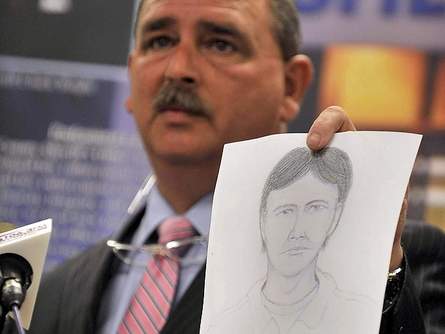
Much has been made recently that Todd Kohlhepp is the guy in the Superbike composite, the guy who was pretending to be a customer - in the words of Sheriff Chuck Wright - who was checking out a motorcycle just a little over an hour before the murders went down. Let's ignore for now that Sheriff Wright claimed that not only was the man in the composite a person-of-interest in the Superbike murders (and I think he should be as he cannot be totally eliminated as a suspect) but that Wright actually claimed he WAS the Superbike killer:
When asked if the sketch of a white man with dark brown, feathered hair is a person of interest or suspect in a 2003 quadruple homicide in Chesnee, Spartanburg County Sheriff Chuck Wright held up the sketch and replied, "I'm going to be bold enough to say this is my man right here."
http://www.goupstate.com/news/20120301/new-sketch-of-suspect-released-in-multiple-superbike-murders-case
Okay, there is zero evidence to support that the man in the composite had anything to do with the crime. Yes, he was in the store that day, but other than that, there is nothing to say that this was the guy. If it was him, he allowed a bunch of people to see his face and, then, instead of just getting rid of these witnesses along with his targets, he left and came back later, leaving people who might well be able to identify him. Sheriff Wright gave a false statement to the public that he knew this was the man who committed the crime.
But, let's put that aside for now. Let's actually go along with Sheriff Wright for the moment and assume that this is the Superbike perpetrator. What do we know of him? Well, we have a description of a white male, age 25-40, 6 to 6'4" (depending on exactly which statement one goes with as the witness kind of waffled), who had dark brown to black hair and a mustache. His weight was somewhere between 175-200 pounds.
Okay, he COULD be Todd Kohlhepp. But, he could be a bunch of other guys in the area as well. What is true about witnesses is that they can be pretty darn good with a description or so far off you wonder about their powers of observation. Now, if five different people gave a description of a really tall man with a limp in his right leg, a jagged scar running down the left side of his face and a tattoo on his arm that said, "Death to All Hos", I am going to say you might do pretty well with that composite! But a tall white guy of normal weight with wavy brown hair between the ages of 25 and 40, you just pretty much could have a casting call in Spartanburg and fill up a football stadium.
Then, nine years after the crime, the witness says he can be more accurate than he was the day after and a new composite is drawn up! Really? Any expert will tell you that memory does not improve over time; the first rendition is far more likely to be correct than the second.
But, let's put all that aside as well, and ask, could the man in the composite be Kohlehpp? By looks, sure, could be him. But what about the other evidence? Evidence which more strongly identifies who this man could be.
Here is what the witness said:
He stated it appeared to him that Scott (Ponder) did not know this person. He also heard the subject state he had never ridden a bike before.
Whoa! What? Wasn't Todd Kohlhepp supposed to have been a customer of Superbike? Wasn't he supposed to have bought a bike there and didn't the guys at Superbike take him out to teach him how to ride and make fun of him when he fell? Wasn't he supposed to have returned to buy another bike from Superbike and they made fun of him again, laughing at him about getting his previous bike stolen? Then, how is it this man in the composite was apparently unknown to Scott Ponder and a new bike rider as well?
The most reasonable answer is that the man in the composite is not Todd Kohlhepp. This does not mean that Todd Kohlhepp could NOT have committed the crime; it just means that the composite is not likely to be proof of him having any connection to it.
Again, we have a lot of claims that Todd Kohlhepp is the Superbike killer but, as of yet, we haven't a shred of proof, just a lot of innuendos and lies. I have no problem with Todd Kohlhepp being a suspect but until there is solid proof that he committed this mass murder, I will question why the Spartanburg County Sheriff's Office is giving out false statements about this man and the Superbike crime and ask the citizens to demand actual evidence of his guilt. Some say to wait and find out when this case goes to court but my fear is a plea deal will be made and this case will never go to trial. If that happens, we may never see any evidence that Todd Kohlhepp is guilty of this particular crime. And if it isn't him, then the real killer will still be out there.
NOTE: A number of people have not believed that I have any real knowledge of whether or not the Superbike victims were actually shot in the forehead. To them: I have read the autopsy and police reports as I reviewed this case in person at the Spartanburg County Sheriff's Office. The information below on the location of the headshot wounds comes directly from the reports.
___________________________
One of the things police departments do in the course of releasing information to the public is to give the public enough information to encourage tips that might be useful in identifying who the perpetrator of a crime might be, but leave out details that serve no point in aiding identification, details that might help prove they have the right individual if someone they are interviewing gives details of the crime that they have kept secret.
The Spartanburg County Sheriff's Office gave out quite a lot of details about the Superbike murders - what door they believed the killer came in (the back one), that he fired a lot of shots at the victims, and that he circled back around and shot each one of the victims in the head.
The Spartanburg County Sheriff's Office (SPSO) is adamant that the shooter came in the back bay door of the business shot Chris Sherbert first as he was cleaning up a motorcycle, then went through the swinging door into the shop and encountered Beverly Guy leaving the bathroom or the office and shot her, and then shot Brian Lucas and Scott Ponder as they tried to escape out the front door. Eighteen rounds were fired requiring a changing of clips. The SPCO has never explained just when the shooter did this in the midst of shooting the three in the front room and there is no explanation, if he had to change magazines at that point, why the two men didn't escape further while he was doing so. They never explained why, if the shooter mixed his ammunition which included eleven with nickel casings and seven with brass casings (which is what they told me they thought happened - something not very common along with the need for an extended magazine, something also quite rare) and if he shot the victims from the back of the store to the front, how odd it would be that at least three of the victims ended up with a bullet in the head that had a brass casing. I believe the killer had a full 10-round magazine with nickel (nickel-plated over brass) cartridges (plus one nickel cartridge in the chamber - 10+1) and a second magazine with brass cartridges.
I believe the SPSO attempted to develop a scenario that matches their theory that the unknown guy in the composite first went after the employee cleaning up the bike he was supposed to buy and then went after everyone else. Not that this makes great sense because if you come in the back way and start the shooting there, you are unaware of who is out front and by the time you get there, other customers may have come in. Besides, your anger should be with Scott Ponder and he should be the most important target and normally a killer would choose him to start with. Perhaps the thinking is that the perpetrator didn't want his vehicle seen so he parked in the back and came in that way and then went back that way to his vehicle. Nothing wrong with this theory and, in fact, it still could be true if the guy walked past Christ Sherbert to the front, did his shootings, and then returned to get Sherbert. But, the detectives, refused to even allow for this possibility and I think this stubbornness lies in their desire to make Sherbert the first victim of the guy in the composite and, in doing so, they choose to ignore the ballistics evidence. But it is terribly important as it shows exactly what the shooter did and why - as you will see.
I propose this scenario of how the shootings went down (there is an issue with a couple of the casings whether they were brass or nickel due to the manner of notation in the files):
The behaviors of the victims clearly indicate Beverly Guy was shot
first. If the killer had been intent on shooting Ponder or Lucas first and pulled out a gun in the front room, he would likely have shot the men where they stood considering how close the shooter was to these two men. However, the killer shot them only after they were in motion, running toward the front door
in order to escape. Something clearly set them off and this would be the
shooting of Guy. I believe he pointed the gun at Guy's face and she turned her head causing him to then shoot her in the right side of the head. She fell and he shot her with. (Shot One - Nickel Casing). Then he fired directly at Guy's before she fell (Shot 2)( Nickel Casing 19) was fired directly at Guy’s chest, the shooter being face to face with her, the men made a break
for it (Shots Three and Four, Nickel Casing 20 and Projectiles at 9 and 10).
The next shot hit Brian Lucas in the backside causing him to
collapse in the door, with Scott Ponder leaping over him; then numerous shots to Ponder’s
back took him down to the ground (used up all the nickel shot in the magazine). It was here he changed magazines to the brass.
At this point the shooter knew there was one more person he needed to deal with and he turned and went back through the swinging doors into the work area. There was music on in both the front and back so it is questionable as to whether Sherbert actually knew the others had been
shot down. It is possible he did hear the shots but by the time he realized what was going on, the shooter had already entered the back of the shop. The shooter fired as soon as he came through the swinging door approximately from the area of three bikes to the left of the door. (Brass Casings 21 and 22. The trajectory is in perfect line with the back storage room where the bullets went through the boxes. The
shooter’s position would be in the general area where the crescent wrench with the black handle was found should Sherbert have thrown it at the shooter in a desperate attempt to stop him. This evidence is proof that Sherbert did see him coming and that the shooter was coming at him from the swinging doors. He was the final victim, not the first victim. Sherbert likely was ducking behind the
motorcycle he was working on as soon as he saw the killer coming toward him
with a gun. He then moved in on Sherbert who had no way to stand up from behind the motorcycle and run out the bay door without getting shot. The shooter came up over him and shot him in the back and chest (brass casings) and then capped him with a shot to the top of his head (Brass Casing)
The shooter then returned to the front of the business to
make sure Brian and Scott were dead. It is during this time (or while the shooter was in the back) I believe Ponder, still alive but knowing he was not going to make it, dialed 33 on his phone and pressed send, attempting to reach his wife with a final goodbye and, perhaps, an attempt to identify the shooter to her. Ponder appears to have pushed himself up on his knees with his left arm and dialed his phone with his free right hand and pressed the send button at 2:52. This was likely very
within a minute or seconds before the shooter capped him in the head. I do not agree with the theory that Ponder dialed the phone number while running in a panic over his friend and through the glass front door. I have attempted to recreate this scenario and found it impossible to hit the three buttons on the phone while in this kind of motion. The shots in the head of all four victims apparently ended their lives within seconds as there is no evidence of movement after the last four shots were fired.
At 3:12 PM, the emergency phone call to 911 comes in from
Noel Lee.
Now to the head shots: First of all, not everyone was lying on their backs making a shot to the forehead an easy thing. The shooter had no plan to shoot them all in the foreheads. He simply came up to each victim and delivered a final shot to the head to insure that they did not survive the attack.
Here are the locations of each of the four final headshot wounds (entry only):
Scott Ponder
Right temporal region 4.75 inches from the top of the head, 3.0 inches to the right of midline, and 4.25 inches circumferentially from the midline anteriorly
Brian Lucas
Gunshot wound 1 – Above left ear 3.5 inches from the top of the head, 2.75 from left of midline. No powder stippline or tattoing is identified.
Beverly Guy
Gunshot Wound 1 - Entrance wound in the right temporal region at the hairline 3.5 inches from the top of the head and 3.5 inches to the right of midline. No surrounding soot or powder deposition is identified. A barrel imprint is not present.
Chris Sherbert
Gunshot wound 1 – Left paritel skull 0.5 inches from the top of the head and 1.75 inches to the left of midline. The wound measures 0.32 inches in diameter with a small superficial abrasion associated with the wound in the hair.
Four shots to the foreheads of all four victims?
Absolutely not - and why the Spartanburg County Sheriff's Office wants you to believe this lie is something every citizen and family member of the victims should question and demand an answer.
Let me start out with this simple statement: I can accept that Todd Kohlhepp is the Superbike killer, a freaky anomaly whom I never suspected committed the crime, I am okay with that...if it is really him. If it is really him, four families can have closure after thirteen years and finally see some justice in the murders of their loved ones. If my profile of the case, my analysis of the evidence, did not point to Kohlhepp, I apologize to the Spartanburg Country Sheriff's Office (SCSO) for having been less than useful in my service to them. I can admit to not always being right, not 100%; I never expect detectives to always be right or 100% perfect either. We are just humans trying to do our best. This is one reason I am very particular about criminal profiling being considered a tool in aiding focus and decisions in investigation, not some kind of psychic vision of exactly what happened. I make sure when I turn in my profiles to police departments that I explain each and every one of my conclusions and what evidence supports those conclusions. I hope that my analysis and clear explanations allow the detectives to use their own skills in deciding if my conclusions make sense and if they should follow through on my thoughts and suggestions.
The Superbike case was a mess from Day One. It has been made public that the investigation appears to have gone the wrong direction when DNA results were screwed up and Melissa Brackman (then married to Scott Ponder) became the main suspect. Even now with the claim by the SCSO that Kohlhepp is the Superbike killer, they have admitted they never even interviewed him in spite of his name supposedly being on a Superbike customer list and having such a horrific criminal record.
I was brought in in 2009 to review the case. I spent a week inside the SCSO reviewing all the files and developing my analysis. I did note that the strongest lead was not followed up on properly and there were a number of errors made in double checking information and unlikely theories were pursued that may have badly effected the investigation. I have seen this quite often with cold cases, so I don't get that upset with detectives; they are doing their best with the training they have and I do believe they wish to solve their cases.
However, in the Superbike case, there was an overfocus on the unknown customer in the shop and Sheriff Wright kept saying over and over that this was the guy who committed the crime. Yet, there was not one shred of evidence to support this person's involvement while much evidence pointed to another individual. When I questioned Wright as to why he thought it was this guy, he told me that the individual never came forward to the SCSO and let them know it was him. I laughed and said, "I don't think I, myself, would come forward! I would think I would be accused of the crime!" Wright told me the citizens of Spartanburg were of a stellar type and would definitely come forward. I asked him if he thought someone with a concerning criminal record would be willing to put his neck in the noose and he said he believed that even someone with a criminal record would come forward. I was not sure what world Sheriff Wright lived in but I found it rather rose-colored-glasses-ish to think this way.
But, I didn't belabor the point. I gave my final analysis to the SCSO and left town. I never contacted media and I never told the family what my profile included. I kept quiet until Sheriff Wright made this statement three years later:
In March of 2012, Sheriff Chuck Wright said on the killings were, "probably one of the most gruesome, horrific crimes committed in our county."
With a new sketch released, Wright said they wanted national media attention because someone out there had to know the person. He said that because the customer was never identified and never came forward as a witness, deputies believed he knew what happened.
"This fellow will tell us exactly what happened in the shop that day," said Wright.
In other words, he said he was the killer. And this was a blatant lie since there was no evidence at that point in time to support such a claim. I, therefore, made a public statement that there was no proof that the man in the composite was the killer. Sheriff Wright then spoke out on television and claimed I had no inside knowledge of the case and only knew what I had "read on the Internet." I followed that up with some posts concerning the case which indicated I did indeed know more than what I read on the Internet. It was my hope at this time to encourage the families and citizens not to accept lies from their public servants and get Sheriff Wright removed from office. I had hoped a new sheriff might move the case forward based on evidence and there might finally be some progress.
However, nothing came of my stand and I said no more until recently in 2016 when Todd Kohlhepp suddenly came out of the blue and "confessed" to the Superbike crime.
I was stunned, to say the least. And confused. A serial killer that is also a mass murderer? That would be one for the history books. It isn't the way serial killers behave. An angry customer? There were no known angry customers except for a slightly peeved final customer that tragic day but that man wasn't Kohlhepp. There had been no angry phone calls or angry visitors to the establishment in the days or weeks or even months leading up to the mass murder. Todd Kohlhepp made no sense except that Sheriff Wright was up for re-election in the next few days and the Superbike case had been an albatross around his neck; could Todd Kohlhepp simply be a convenient patsy?
And what would be his motive to kill four people in cold blood? Eventually, the story came out - or should I say two stories came out (both obviously from Kolhepp or the police but not from true witnesses). One, that he bought a bike from the store and the people there laughed at him when he fell over while learning to ride and, two, that he bought the bike, it was stolen, and they laughed at him when he came back to buy another. Both stories are pretty unimpressive as a motive for murder but add to that six months passing between the time he bought the bike to when he supposedly gunned everyone down and it is even more shaky. I guess one could conjecture that he came back six months later to buy another bike and he was the man in the composite and he was laughed at once more but it still seems quite unlikely that one joke would inspired Kohlhepp to come back an hour later and mow everyone down who worked in the shop. Yes, he is a psychopath and a killer but it is still a pretty lousy motive.
But, where is the evidence that it is him? So far, there is no physical evidence but it has been claimed by the SPSO that Todd Kohlhepp knew things only the killer could know. I found that odd since pretty much everything about the crime had been on the Internet - on Geraldo, on Ameria's Most Wanted, on Crime Watch Daily and on my blogs and other's blogs. But, then 48 Hours had Melissa Brackman (Ponder) receiving a call from Detective LaChica of the SCSO in which it is said he stated that Todd Kohlhepp knew something only the killer would know, that ALL THE VICTIMS WERE SHOT ONCE IN THE FOREHEAD.
FOREHEAD? I was stunned again. True, THAT piece of information had never been made public.
Lead investigator, detective William Gary with the Spartanburg County Sheriff’s Office, said the caliber of gun used was a 9 millimeter and that a number of shots were fired with few misses.
“The person that did this was very accurate in their shooting. They had at least two moving targets, possibly three,” Gary said.
One theory is a “disgruntled customer” murdered the four people out of revenge. The show said there was speculation the shooter was a professional hit man. After the victims were shot, investigators say that the murderer circled around and shot each of the victims in the head, execution-style.
Okay, so the SCSO did say they were all shot in the head execution style but never mentioned there were shot in the forehead. So, if it was true that all the victims were shot in the forehead and Kohlhepp knew this, then, indeed, he knew something that had not been made public.
The only problem with this is "it is NOT true." NONE of the victims were shot in the forehead. So why is Kohlhepp saying this (unless he just guessed and guessed wrong and, therefore, is NOT the killer) or the SCSO is making this up to get the public to believe that Todd Kohlhepp really is the killer?
If this case is plead out, if Todd Kohlhepp admits guilt and the case never goes to court (saving Kohlhepp, perhaps, from the death penalty, and saving the families from the trauma of reliving the crimes), then no evidence will ever have to be publicly presented to prove Kohlhepp is the Superbike killer.
Something is very wrong in Spartanburg and the citizens need to find out exactly what it is.
Sheriff Chuck Wright of the Spartanburg County South Carolina Sheriff's Office - Guilty of Nonfeasance, Misfeasance, Malfeasance or just Incompetent?
What I didn't read on the web about this South Carolina county and their broken form of justice
Sheriff Chuck Wright and His Only Suspect
By
Don Corbett Board Certified
Investigator-Retired Police Detective
June 3, 2012
Note to The Daily Profiler Readers from Pat Brown: Today’s guest post is written by Don Corbett, a retired police detective, private investigator, and instructor for law enforcement. Like me, he has put in many hours pro bono on behalf of the families of the victims of the now near nine-year-old 2003 Spartanburg Country Superbike Motorsports quadruple homicides. And also, like me, he understands the struggles of police agencies to solve homicide cases and bring them to prosecution. However, he also fully recognizes, that there are some police agencies and government representatives, like those of other professions, that fail to do their jobs, refuse to be accountable for their work product, block oversight, and abuse the powers given to them by the state or the citizens. These particular agencies and individuals need to be identified and corrected if truth and justice is to prevail for the victims of these crimes and their families, and for the perpetrator or perpetrators of these heinous crimes to be removed from the streets so they cannot commit further damage to the community.
Sheriff
Chuck Wright has been heard on local and national television over the past year
stating ad nauseam, “Our form of justice is not making it.” Yet instead of making an
effort to be innovative and try something new to fix his broken form of
Spartanburg justice, he simply took the easy way out and told all women to arm
themselves. The Sheriff and his staff have treated the eight year unsolved cold
case of The Superbike MotorSports Quadruple Homicides in exactly the same
manner, the easy way, telling the victims' families that the Spartanburg form of
justice is broken in one breath (the case has been inadequately investigated
from the start so we can’t fix it) but seconds later telling that they don’t
need any outside help because they have everything under control.
So, the
Sheriff, instead of trying a new proactive approach such as by utilizing outside
assistance from trained, experienced investigators and criminal profilers, valuing fresh sets of eyes and their findings and recommendations, he has
decided he will continue to do it the good ole boy’s way of broken Spartanburg
justice. Keep the facts concealed to only a chosen few who have been doing the
same thing over and over again for eight years without any quantifiable results,
openly lie to the public, mislead the families into believing the case is being
actively investigated by one cold case detective who has 50 other cold cases on
his desk and shooing away any assistance who might identify nonfeasance,
misfeasance, malfeasance or outright corruption on the part of the past
sheriff, himself or his investigators. Why else conceal the facts after 8
years other than that they are hiding something?
Are Spartanburg County South Carolina Sheriff Chuck Wright
and his staff guilty of wrongdoing in the 2003 Superbike Motorsports Unsolved Quadruple Homicide
Investigation or are they just incompetent? That’s a question the victims'
families, residents and news media of Spartanburg County
need answered.
By failing to allow other experienced professional board
certified, retired police detectives and investigators such as myself to review
the cold case file under the Freedom of Information Act (FOIA) and failing to
consider all of the findings and recommendations of the highly
recognized and experienced criminal profiler, Pat Brown (who
DID review the file for a total of 50 hours at the department's request and about which Sheriff Wright
outright lied on camera to the citizens of Spartanburg when he stated, “She's
pretty critical of a case she doesn't know anything about…that she's getting
off the Internet”), by failing to cooperate with them in hopes of developing new leads, Wright sends out a clear
message - to hell with the victims' families and the public; if we can’t solve
this case by ourselves, nobody will. So what if a quadruple murderer still
lives and works in this town with the broken justice system? Maybe will get him
next time. I have my ego to protect!
The Center for Public Integrity recently released its 2012 State
Integrity and Corruption Investigative findings and out of 50 states, South Carolina finished as one the worst five in the US. The
South Carolina Corruption Risk Report Card gave them an F receiving a 57% out
of a possible 100 points. The report can be viewed by viewing this link: http://www.stateintegrity.org/south_carolina.
In the report, South
Carolina received an F in Release of Public Access to
Information, Ethics Enforcement Agencies, Executive Accountability and other
critical areas of government. Sound familiar? It sounds like the Spartanburg
County Sheriffs Office was the place graded.
After working with Pat Brown on this case and looking at the
facts as we know them, it is blatantly obvious that the Sheriff and his
investigators have failed miserably by not focusing on the evidence at hand, not properly investigating the two most obvious persons-of-interest, and not letting the family and
others know what they really have uncovered at this point but, more importantly, what they don’t have not.
Sheriff Wright has forgotten about the family and victims
and has let his ego stand in the way; his broken justice system refuses to
reach out for free assistance. What does he have to lose? Sheriff Wright needs to
quit hiding behind his lame interpretation of the South Carolina Freedom of Information
Act Exemptions section and open this case to those who can develop the
information he needs to put a killer behind bars.
On his first full day in office, President Obama issued an
executive order that turned a new page on open government and emphasized the
importance of transparency, stating, "A democracy requires accountability,
and accountability requires transparency... In the face of doubt, openness
prevails." Apparently Chuck Wright missed the president’s comments or
believes it doesn’t apply to his “Good Old Boy Network”.
A great majority of Spartanburg County residents and the
media are currently under the false impression that their sheriff and staff is
omnipotent and above misfeasance, nonfeasance or malfeasance when investigating
violent crimes and cold case homicides, believing that all cases will be adequately
investigated in a timely manner by a professional-experienced investigator who
is willing to think outside the box, and that they will release pertinent information which will
assist in identifying suspects and murderers. But they have been badly misled
by Sheriff Wright and his “Good Ole Boy Network”.
More and more often, victims’ families are learning that they are again victimized by the very
agency charged with solving the crime. Sheriff Chuck Wright must begin to work
with the public by sharing information with them to take murderers off the
street. He has obviously forgotten he is responsible to protect and serve the
public and needs to be held accountable for his organizational dysfunction and
lack of professionalism.
Each of us knows that
people's trust in law enforcement is increased when their police, sheriff and
related law enforcement authorities can show and demonstrate to the public and
victims' families that they have conducted a thorough investigation with integrity.
By failing to release information on this investigation to other trained
professionals and the victims' families it would appear to the family and public
that Sheriff Wright has failed to adequately investigate the case or has
something to hide. It also breeds corruption which sources have advised me openly
exists in South Carolina.
In this case, Sheriff Wright has intentionally withheld
information from the media, trained outside investigators, the victims’
families and the public by denying them access to the case file, again hiding
behind his lame interpretation of the FOIA law enforcement exemptions section
and what appears to be blatant incompetence in office.
This is a travesty of justice and an insult to the victims'
families who must live every day traumatized by not knowing who and why
someone murdered their loved ones and when and where they will strike again.
And without question, this killer will kill again and may have already done so.
I have made it clear to the Sheriff that I do not need to view any restricted or confidential data that may
affect a future trial and will not copy or record anything he deems restricted.
I also offered to sign a confidentiality and non-release agreement with the
Sheriff.
In this nearly 9 year old blitz style quadruple homicide
where four young lives were snuffed out with no named person of interest or
suspects being publicly identified, Sheriff Wright still refuses to allow the family
or me (acting on their behalf) to view any part of the investigative file in an
effort to develop new leads, locate something that was overlooked by the original
investigators, etc. They had steadfastly refused to allow the family or me to see Pat Brown's profile even though they claimed it was useless. My concern is when does a cold case of this magnitude
become available to the family and their representatives so that they can
confirm that every thing that can be done to solve the case has been done? Simply
relying on Sheriff Wright’s hollow statements that they have done everything in
their power to solve the case is not acceptable and disrespectful to the
families and public.
If the case is never solved by the authorities but left in an
"open-active" status, the family, outside investigators, public and media
will be forever kept in the dark as to what occurred on that hot November
afternoon and a killer will continue to roam the streets to kill again. We believe
the Sheriff needs to open this case file, listen to our recommendations and
findings and solve this case.
Based on my professional opinion as a seasoned board investigator/retired
police detective and my interpretation of the South Carolina FOIA, Sheriff Wright
should have no reason to deny my viewing of the investigative file (minus
restricted data) based on the totality of the circumstances and the 8 + years
that have passed since the crime was committed which certainly confirms I am
not acting prematurely in this matter. If the sheriff never closes the file or
allows others to view it, this investigation will go unsolved forever.
As a retired police detective and board certified
investigator with 30+ years experience it is obvious to me that Sheriff Chuck
Wright is either guilty of nonfeasance, misfeasance or malfeasance for his
total lack of accountability and failure to respond to my repeated official
request for documents which under the FOIA is a clear violation of South
Carolina law punishable by jail and fines. Sheriff Wright has also commented
that if I had been in his office when he received my initial request, he would have
ignored my FOIA request for these records and he would have “decked me” which is an
obvious threat, not to mention extremely unprofessional for a person in his
position. His investigator William Gary, has also threatened to arrest me if I
failed to stop interviewing witnesses while in Spartanburg.
It is further evident that Sheriff Wright has intimidated
others in the community including the media, his own investigators, deputies
and potential witnesses to the extent that they fear repercussions if they
discuss the Supebike Motorsports killings without his authorization.
There
is an old Latin phrasefrom the Roman poet Juvenal, “quis
custodiet ipsos custodies,” that
translates to “who’s policing our police” which desperately needs to be
answered in Spartanburg County, South Carolina. Who’s policing Sheriff Wright
and his Posse? Evidently, no one. Sheriff Wright needs to lose his over-inflated
ego and do the “WRIGHT” thing. Open the case file.
Don Corbett is a retired police detective and board
certified investigator with 30+ years of experience in law enforcement and
investigations from the State of Ohio who assists families of murdered and
missing children get the cooperation, information and service they deserve from
law enforcement investigators.
Don Corbett, Columbus, Ohio
May 28, 2012
Contact number 614-565-7189 or email
donaldcorbett@gmail.com
Note: The phrase "I read it on the Internet" is included in this original post because at the time it was written, Sheriff Wright had claimed I never worked with the department and everything I know of the case "I read on the Internet." Clearly, I did NOT get my information from the Internet but from police files but if Wright was willing to make that statement, I was willing to write exactly what "I read on the Internet."
This is my third and final post on the Superbike quadruple homicides that took place in Chesnee, South Carolina in 2003. I will be discussing persons-on-interest and how the evidence in the murders supports taking a stronger look at some of them and doesn't support overfocusing on certain persons to the exclusion of better suspects.
Before I begin this discussion of what I read on the Internet concerning certain persons-of-interest, I want to state that nothing I am putting forth here is any accusation of guilt; no one has been proven to have committed these crimes and they are innocent in the eyes of the law until proven otherwise in a court of law. However, if certain people behaved in certain ways and said certain things that are concerning, then it is not unreasonable to expect that the investigators from the Spartanburg County Sheriff's Department should have properly and thoroughly investigated these persons, which, from what I read on the Internet, they did not.
There are three main persons-of-interest in the Superbike murders. As in all crimes, the last person to see the victims alive, the first person to see them dead, and anyone who might have had access to the scene in between those times are the persons-of-interest and each needs to be investigated and eliminated.
I want to start with the least likely person-of-interest in these crimes which is the man in the composite the Sheriff's Department has been dogging for almost nine years, claiming straight out that he is involved in the homicides. First of all, from everything I read on the Internet, there is not one shred of evidence linking this unknown man, this customer who was not the last person in the business before the homicides, to the crimes. There is no unknown DNA or fingerprints that can be linked to anyone, so no match is ever going to pop up in CODIS linking some felon to the Superbike murders. Unless this man one day is arrested for the commission of another crime and a firearm is found on his person or in his car or apartment that matches the ballistics in these homicides, then this avenue is pretty much worthless. The only other possibility is that someone rats him out, a warrant is gotten, and the detectives find the gun at his residence. Could it happen? Sure. Not likely, but I am all for a miracle.
Problem is, the man in the composite is the least likely of the three persons-of-interest to have committed the crime. Why? First of all, it is blatantly stupid and hard to believe that this man would go to the business, spend a relatively long time chatting with the people there, sit on a motorcycle, and let all the other customers see his face if he were planning to blow everyone away that day. Furthermore, why would he leave the business and come back to kill everyone? Why not hang around until there were no customers were there or just kill a customer or two if you are psychopathic enough to blow away the others? And since you have let someone see your face, the customer who inspired the composite, why not just kill that man so you don't have a witness left behind to identify you? I find the unknown customer in the composite a red herring of a lead that, yes, should have been followed up but he would not be my top choice of focus.
Let's back up to the last person who was in the business before the murders went down. As I read on the Internet, he was a reasonable person-of-interest and he has not been entirely eliminated. The best reason to look at him was the simple fact he was there right before it all went down and, if he killed everyone and drove off, there would be no witnesses to say it was him. However, his credit card was swiped right before he left, so he would have to be a blazing idiot or extremely angry. Now, the first he was not from what I have read on the Internet; the second was possible. He was a bit annoyed with the shop that day. And, because of this, he needed to be eliminated as a suspect. As I read on the Internet, he certainly had firearms and he refused to take a polygraph. However, it seems, he might have an excellent alibi. As I read on the Internet, his truck was seen going by a convenience store in a video with a time stamp on it that was only two minutes after the last shot was fired. That shot was made at 2:52 pm and his truck was seen going by at 2:54 pm. Now, the drive from the shop to the store is 4.2 miles and supposedly takes eleven minutes according to Google. I test drove that road in a sports car and I was able to cut the time in half.
I was unable to learn from the stuff I read on the Internet whether the detectives had double-checked the accuracy of the clock associated with the video; if the time was off by a few minutes, this could disqualify the alibi of the last customer. However, the time would have to be quite a bit off because it took me around five minutes to drive like a hellion in a small sports car and I had to time leaving the parking lot just before I saw a car coming, so I could pull out in front of it and hope to get a clear road all the way to the store with no slow boat in front of me or anyone pulling on to the road and ruining my speedy run. In fact, it took me a dozen runs to get lucky enough to have no traffic impede me and get my speed down to five minutes. The last customer/person-of-interest was driving an old truck which was pulling a motorcycle, so unless the clock was seriously off (by at least five or six minutes), there is no way he could have made it down the road that quickly. However, the clock should still have been checked so that this man could have been solidly eliminated as a suspect and he wasn't.
Although this would be my second-in-line person-of-interest, I think his alibi could hold, the credit card swipe with his name makes it rather unlikely that he would then commit the homicides, and, although he was a bit annoyed, there is nothing in particular that makes me think he had enough motive to kill everyone there, starting with Beverly Guy.
Now, to my Number One person-of-interest, Noel Lee. Again, I will state that I have no proof from what I read on the Internet that there is evidence to arrest and convict this man. He is only a person-of-interest to me and, in the eyes of the Sheriff's Department, not a person-of-interest at all. How this can be mystifies me. Even if he is innocent of the crime, he should have been investigated and eliminated because he was, as I read on the Internet and you can actually read this on the Internet and even see him say so in Geraldo's video, that he was the one to discover the bodies and make the 911 call. The only reason I mention his name here is because he willingly did so with his appearance on television which means he was not attempting to keep his identity a secret.
The first reason Noel Lee must be a person-of-interest is because he was the one to discover the bodies. As we have seen in many crimes, often the perpetrator shows up on the scene to "find the bodies" because that way. he can have an excuse for being seen there in case he was indeed seen there (or his vehicle was seen there or in the area) and, if he is worried his fingerprints are there or he has blood on his clothing, he can say he touched things when he arrived or he touched the bodies in an attempt to check on their condition or do CPR. To be clear, from what I read on the Internet, Noel Lee, who discovered the bodies, did not have blood on his person or clothing and he did not touch the bodies. He only touched the phone in the business and there is no information available as to whether his fingerprints were found anywhere (supposedly only the fingerprints of the victims were found which is a bit odd considering this is a place full of customers). However, it is unlikely the killer touched anything anyway as this all went down very quickly. The only places he might have touched would have been the outside door and the swinging doors between the front showroom and the back work area. He may have been wearing gloves.
The second reason Noel Lee should be a person-of-interest is because he has no alibi that I know of (from what I read on the Internet). He phoned the business from his home phone and spoke to Beverly Guy about picking up some tickets. As I read on the Internet, that call was placed at 2:25 pm. The shootings took place around 2:50 pm with the last shot being fired at 2:52 pm. Lee placed the 911 call at 3:12.
Noel Lee's home is 11.4 miles from the shop. Again, Google states a rather slow drive with nearly thirty minutes required. Considering I halved the drive to the convenience store in my sports car, I find it highly likely Lee could drive the distance to the shop in his BMW in half that time or less considering he states, as I read on the Internet, that there were no other cars at all on the road on his way to the shop. If he left the house directly after hanging up the phone, he could have been in the store by the time the shootings went down.
From what I read on the Internet, Noel Lee's story changes from his first to his second interview and he says a number of things which are rather peculiar and raise red flags; this is another reason he should have been looked at more closely.
As I read on the Internet:
In his first interview he states: He tells Beverly Guy he is on his way to pick up the tickets, arrives at the store, and thinks his friends are playing a joke on him by lying in blood on the sidewalk in front of the store; then he stated, "I’m calling 911 and immediately went to the phone inside the
front show room on the wall and called 911. She asked me if they was anybody
down and I told her I see his mom down in the back showroom and she said is
there anybody else down? I said I don’t know. I’m not walking into the back of
this place. She said well go back outside and wait on 911 to arrive. So I
walked back out front and waited on you guys to get here." He also states he hadn't been around the business within the last two weeks.
In his second interview, two years later, he states: " For some strange reason, I decided to take a shower instead
of just throwing my clothes on and going up there." And he is talking to his girlfriend the entire time while he is driving. In fact, she tells him not to call 911 from across the street (or to use his cell phone) but tells him to go inside the business (where the killer might still be) to make the phone call. He claims she told him that "if you leave and somebody sees you leave, they are going to think you did it." So he steps over his friend's body that is blocking the door and goes in to make the 911 call. This time he claims he said something totally different to the operator, "I said I need to go see if the fourth person is here because
they were normally four people here and she said do not go into that back room because you do not
know who else is there." He also states he was at the business the previous weekend.
From what I read on the Internet, Lee states that he went inside without a gun because he wasn't thinking and thought if he could get help there quickly, he could save their lives. Yet, in his 911 call, he doesn't get around very quickly to requesting medical assistance; in fact, his whole demeanor is rather breezy. He also states that he looked to see if Brian Lucas's chest was moving up and down and he was going to give him CPR. Apparently, he never does and he says he never saw his chest move up and down during the time it took for the news helicopter to fly overhead.
There was twenty minutes from the time the last shot was fired until the 911 call leaving Noel Lee enough time to leave the scene, ditch a weapon and wash his hands (he had moonshine available in his vehicle and water is available nearby) and come back. A GSR test was listed (as I read on the Internet) but the results were not. Likewise, there was something about a polygraph but further details were not available. Lee has told others he passed one. No tickets were noted to be found inside Superbike nor on Lee (but it was not stated that his clothing or pockets or wallet or vehicle were examined). Lee states he could see the hands of Scott Ponder, yet this would have been impossible by the time he arrived as Ponder's hands were not visible due to the position he was expired in.
Lee's behavior following the murders was considered odd by a number of people who felt he showed little sadness or concern over his friend's deaths. He claims in the second interview that I read on the Internet that he is on medication to keep him from "wigging out" and he has had seizures since the stress of his first marriage and short-term memory problems which causes him to forget things. Also, I read on the Internet, a curious bit of questioning about Lee having left the scene and come back which he said he was 100% positive he didn't do and "would put his hand on a Bible" to attest to that fact. As to his statement that he "for some strange reason" decided to take a shower, statement analysis of this wording indicates deception; first of all, it is odd Lee would decide to take a shower just to go pick up some tickets and take one at that time for no reason, which is exactly why he has to say "for some strange reason;" it is behavior that doesn't make sense. The only good reason a shower would be useful at that time is to delay his arrival at the shop until after the murders go down.
One more strange statement is useful to analyze; that Lee thought his friends were playing a trick on him by pretending to be dead on the sidewalk and he saw them and told them, "Joke's over." In many crimes when a guilty party gives an odd statement in explanation of what they did or thought, what they are doing is using a previous event (because it did happen and then speaking of it is a sort of truthful thing) and moving it forward to another time or situation. My question would be, "Did someone tell Noel Lee, "Joke's over." And if so, what joke did they think it was?
A number of people state Lee had a falling out with Scott Ponder and Brian Lucas and was told not to come around the shop. Yet, he is supposedly picking up tickets that day from Scott. Just before the last customer leaves, that customer overhears Beverly Guy having a heated conversation with someone, he believes she is on the phone with because he doesn't hear another voice or see anyone else. This is exactly the time Noel Lee made his call to Guy. Twenty-five minutes later, Guy is the first one shot in the quadruple homicides.
I want to point out to those who think this might have been a professional hit: there was nothing particular professional about it. Eighteen rounds were fired to kill four people, a number of them completely missing their target. The shots were fired at relatively close range so an average person would have little trouble hitting their target (and, in spite of this, as I read on the Internet, the shooter missed Sherbert and the two escaping men a couple of times). The victims were capped in the head only after they were immobile, so this didn't require much talent either. The killer left all the shell casings on the floor which meant he left evidence. This is not a brilliant crime nor an overly skilled one. It was simply opportunistic. No one saw the killer commit the crime and he got away with it.
From what I read on the Internet, there was no follow-up on Noel
Lee, no phone records checked to see if he was on the phone with his
girlfriend during the drive to Superbike, no serious interrogation, nothing of substance that indicates the detectives considered Lee a serious person-of-interest or even attempted to eliminate him through aggressive investigation.
Noel Lee just may be an oddly behaving fellow with the bad luck to come upon his friends just as they had been shot. But in almost nine years from the very first day, obvious persons-of-interest like Lee were ignored while one questionable person-of-interest got all the attention. This is an egregious failure of the Sheriff's Department to handle the case properly, if one can call this handling the case at all.
Almost no case so mishandled from the start has a prayer of making it to prosecution. Evidence that should have been located and confiscated early on is likely long gone. For a case with no DNA or fingerprints, the loss of time may be a justice killer. All we can hope now is that by my going public with all the information I have read on the Internet, someone with information and evidence will come forward and, by the miracle all the families hope for, justice can still be served.
And, if it can't be, we need to work to make sure our law enforcement agencies receive better training, more funding, and have criminal profilers in place when the case is fresh so that egos and politics don't squash the input of these profilers or of private investigators who come in years later and find the case has been wrongly pursued. We need to insure that the families and citizens have the right to hold their police agencies accountable for their work product, that new laws are instituted - "Sunshine Laws" -laws that require cases to be reviewed by an independent panel after a specific number of years in order to ensure oversight of case handling and police honesty and professionalism.
Something needs to be done. The failure of the Spartanburg County Sheriff's Department to solve a solvable crime for nearly a decade is not an anomaly in the world of criminal investigations. Cold case after cold case get shelved for similar failures and we are not doing a thing to change a system that is clearly not working.
Harkening back to the writing styles
of the earlier American authors – John Steinbeck, Harper Lee, and Carson
McCullers, "Only the Truth" is a story of soul searching, a
psychological mystery which examines the question, “Whom should one love and
when should one quit doing so?” Billy Ray, a lonely and rather slow, uneducated
African-American man living in the mountains of Arkansas, runs across a mysterious young woman
at the railroad tracks. She asks to go home with him and Billy Ray takes her
with him as she requests. He comes to love this woman, Charlene,
unconditionally. She is the only woman he has ever loved, and life is finally
good for Billy Ray. Then Charlene shoots the neighbor and burns down the
neighbor’s house. His happy life destroyed, a confused and devastated Billy Ray
is at a loss. Is the woman he loves “just a troubled girl” or a psychopathic
killer? Billy Ray sets out on a quest to find the truth, only the truth,
whether it leads him to be able to save Charlene from a death sentence or it
frees him from her spell.
"Killing for Sport is the most valuable insight into the minds of serial killers that you will ever read. While other profilers tend to conceal the clear facts behind complex technical language and psychobabble. Pat Brown actually tells it like it is."